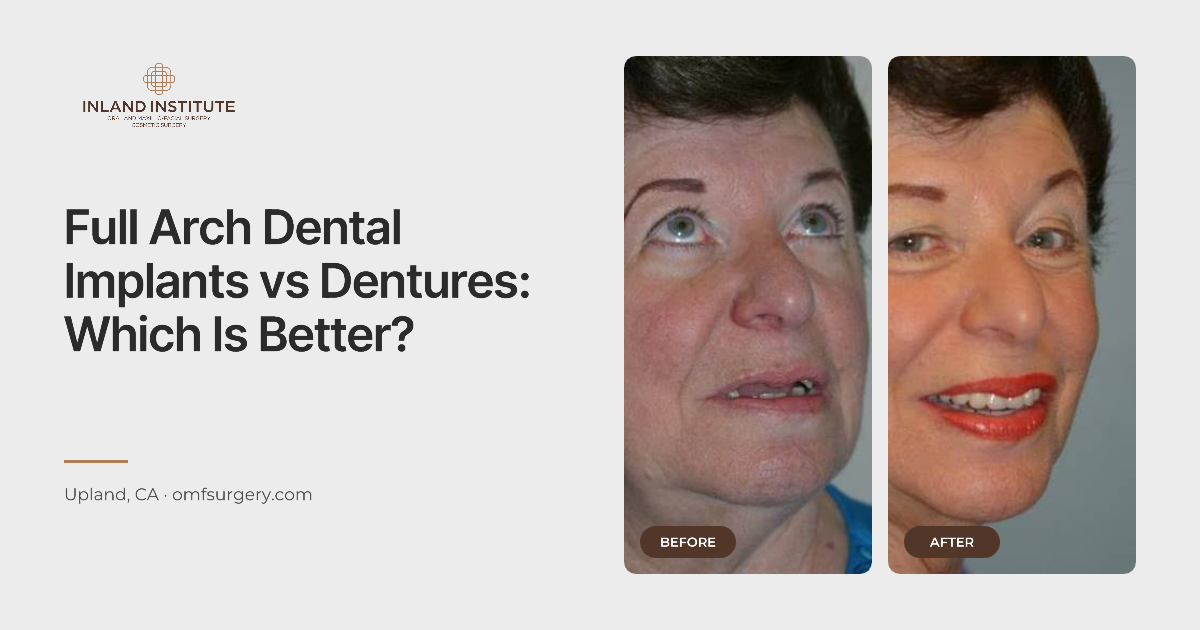
Turning 50 can bring an unexpected frustration: dentures that once felt comfortable may begin to slip, click, or create sore spots. Changes in your gums and jawbone over time can affect how well dentures fit, making everyday activities like eating and speaking less comfortable.
If repeated adjustments are no longer giving you the stability you want, you may be considering dental implants as a longer-term solution. Unlike traditional dentures that rest on the gums, dental implants are anchored in the jawbone to provide greater stability.
For people missing an entire arch of teeth, it may be possible to replace a full arch of teeth with dental implants rather than continuing to manage loose removable dentures. This approach can provide a more secure foundation for eating, speaking, and smiling with confidence.
If you are thinking about transitioning from dentures to implants, understanding the differences can make the decision easier. This guide compares full arch dental implants vs dentures, including stability, chewing, bone support, daily care, and other factors that can help you decide which option fits your needs.
Key Takeaways
- Your jaw and gums can change shape over time, which is often why dentures stop fitting the way they used to.
- Implant-based options are designed to attach more securely, which can make daily tasks like eating and speaking feel more natural.
- Understanding the process, benefits, and considerations ahead of time can help you make a confident decision about your smile.
Why Dentures Can Start Fitting Poorly at 50
Your body keeps changing as you age, and your jawbone is no exception. This natural shift is a big reason why traditional dentures that once fit well can start to feel loose or uncomfortable.
How Jawbone Changes Affect Denture Fit
When you lose your natural teeth, you are left with more than a gap in your smile. Your jawbone also loses the daily stimulation it once received from the tooth roots. Without that stimulation, the body gradually breaks down and reabsorbs bone in the area, leading to bone loss after a missing tooth.
As bone density decreases, the shape of your jaw can change too. Your gums may flatten, and the ridge that once helped hold your dentures securely can shrink. This is one reason the importance of bone health for dental implants becomes especially relevant when considering a more stable tooth replacement.
Because dentures are made to fit the shape of your jaw at a particular time, these changes can gradually affect their fit. You may notice more slipping or movement, especially while eating or speaking.
Signs Your Dentures Need More Than an Adjustment
A simple adjustment can fix minor fit issues, but some problems point to bigger changes happening underneath your gums. Watch for these warning signs:
- Frequent slipping during talking, laughing, or chewing
- Sore spots or irritation that keep coming back
- Clicking sounds when you eat or speak
- Trouble keeping food in place while chewing
- Visible gaps between your gums and the denture edges
These issues often mean your jawbone has lost enough density that the denture can no longer sit properly, no matter how many times it gets relined. If you're dealing with ongoing fit problems, it may be time to talk with your dentist about longer-term solutions instead of repeated fixes.
How Full-Arch Implants Create a More Stable Smile
Full-arch restoration works differently from traditional dentures because the restoration is supported by implants anchored in your jawbone rather than simply resting on your gums. This gives you a smile that stays put when you eat, laugh, or talk, without the shifting you may be used to.
The Difference Between Fixed and Removable Tooth Replacement
Removable dentures sit on top of your gums and rely on suction or adhesive paste to stay in place. This works okay at first, but it often becomes less reliable over time, especially on your lower jaw where suction is weaker.
Full-arch implants take a different approach. Instead of resting on your gums, implant-supported restorations are fixed into your jawbone, so they don't move around when you bite down. You won't need to worry about your teeth slipping while you're eating a meal or having a conversation.
This fixed connection also means you can go back to eating foods that were hard to manage with loose dentures. Full mouth dental implants let you bite and chew with a lot more confidence.
How Titanium Implants Bond With the Jawbone
Full-arch implants use small titanium posts that act like new tooth roots. Your jawbone naturally bonds to these titanium implants through a process called osseointegration, which creates a strong, lasting connection.
This bond gives your new teeth the same kind of support your natural teeth once had. It's also why full arch implants tend to feel more stable and secure than dentures, since they're anchored below the gum line instead of sitting on top of it.
Because the implants connect directly with your bone, they also help keep your jawbone active and healthy. This is a key reason many people choose this type of tooth replacement over traditional dentures as they get older.
Daily-Life Differences: Eating, Speaking, and Confidence
Loose dentures can change how you eat, talk, and feel around other people. Full arch dental implants work differently, and that difference shows up every day.

Bite Force and Chewing Ability
Your bite force matters more than you might think. Loose dentures only give you back a small part of your natural chewing ability.
This means foods like steak, apples, or corn on the cob become a challenge. You may find yourself cutting food into tiny pieces or avoiding certain meals altogether.
This means you can eat the foods you enjoy without worrying about your teeth slipping or breaking down. Your daily meals become easier and more satisfying.
Comfort, Speech, and Social Confidence
Loose dentures can affect how you speak. Some people notice trouble with certain sounds, especially "s" and "f," because the denture shifts when you talk.
This can feel awkward in conversations or during meetings. You might catch yourself avoiding certain words or speaking more quietly to hide the problem.
Full arch dental implants stay fixed in place. Since they don't move around, your speech tends to sound more natural and clear.
You also don't have to worry about your teeth slipping while laughing, eating, or talking. This steady fit can boost your confidence and make social situations feel easier. Many people say their quality of life improves once they no longer worry about loose dentures throughout the day.
Bone Loss, Facial Structure, and Long-Term Oral Health
When you lose teeth, your jawbone starts to shrink over time. This affects more than just your smile. It can change the shape of your face and put your long-term oral health at risk.
Why Traditional Dentures Do Not Preserve Bone
Your jawbone needs stimulation to stay strong. Natural tooth roots give the bone that stimulation every time you bite or chew.
Traditional dentures sit on top of your gums instead of connecting to the bone underneath. Because of this, dentures don't stop bone loss from happening, and your jawbone keeps shrinking even while you wear them.
Over the years, this bone loss can make your dentures fit worse. You may notice slipping, clicking, or the need for more adhesive. This is actually a sign of jawbone shrinkage, not just normal aging.
Your bone density will keep decreasing the longer you go without a solution that supports the bone directly.
How Implants Help Support Facial Structure
Dental implants work differently than dentures. They are placed directly into your jawbone, so they give your bone the stimulation it needs to stay healthy.
This bone-preserving benefit is a real advantage. When you choose implants, you protect your facial structure over the long term while also restoring your ability to chew and speak normally.
Full mouth dental implants can also help maintain the height and shape of your face. Without this support, you might notice your cheeks look sunken or the lower part of your face appears shorter than before.
If you are dealing with tooth loss and wondering whether dental implants are right for you, an evaluation can help determine whether they fit your oral health needs and long-term goals.
What the Full-Arch Implant Treatment Process Involves
Getting full-arch dental implants takes a few steps, from your first checkup to healing time after surgery. Knowing what happens at each stage can help you feel ready and less nervous about the process.
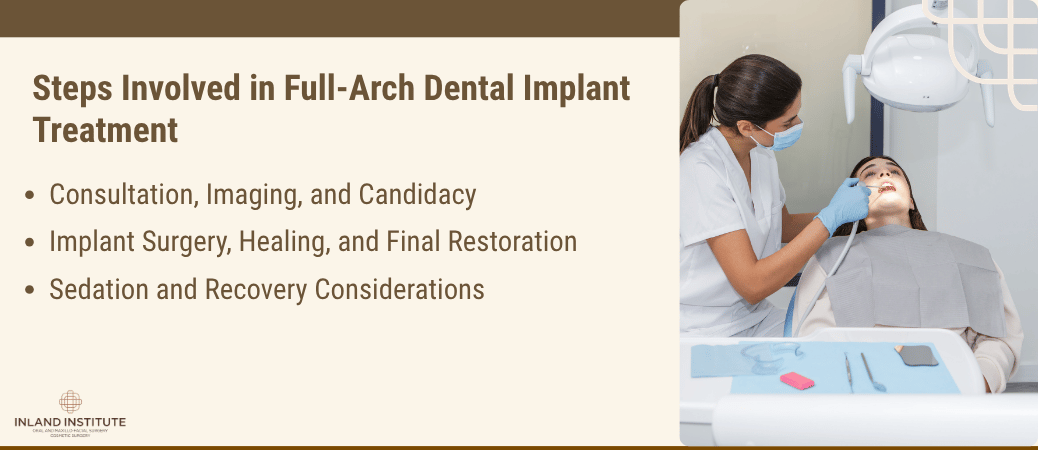
Consultation, Imaging, and Candidacy
Your journey starts with a consultation where your dentist checks your mouth and talks about your goals. They'll take X-rays or a 3D scan to look at your jawbone and see how much bone you have left.
This step matters because your jawbone needs to be strong enough to hold titanium implants. If you've lost bone from wearing dentures for a long time, your dentist may need to check if you're still a good candidate.
At Inland Institute Oral & Maxillofacial Surgery, Dr. David Gilbert can assess your bone structure and determine which approach may give your implants the right foundation for long-term stability.
Your overall health also plays a role. Conditions like diabetes or smoking can affect healing, so your dentist will ask about your medical history. Once everything checks out, you and your dentist can create a treatment plan that fits your needs.
Implant Surgery, Healing, and Final Restoration
During implant surgery, your dentist places 4 to 6 titanium posts into your jawbone. These posts act like new tooth roots and hold up your new smile.
After surgery, your body needs time to heal. This process is called osseointegration, and it's when your jawbone actually fuses with the titanium implants. It usually takes a few months, though some people get a temporary set of teeth to wear while healing.
Once your jawbone and implants are firmly joined, your dentist attaches your final implant-supported restoration. This can be a fixed bridge or another type of prosthesis, depending on what works best for your mouth.
Sedation and Recovery Considerations
Most people feel some worry about pain during surgery, but sedation options can help. Your dentist may offer local anesthesia, oral sedation, or IV sedation, depending on your comfort level and the complexity of your case.
After surgery, you'll likely have some swelling or soreness for a few days. As per post-operative instructions, it is important to stick to soft foods and follow your dentist's instructions to help speed up healing.
Most people return to normal activities within a week, though full healing of the jawbone takes longer. Your dentist will schedule follow-up visits to check how your full-arch dental implants are settling in.
Choosing the Right Tooth Replacement Option at 50
Picking between fixing your current dentures or moving to something new depends on your bone health, your budget, and how much your loose dentures are affecting your daily life. Here's how to think through your options and know what to expect from each one.
When Denture Relines May Still Make Sense
If your traditional dentures are only slightly loose, a reline might be all you need. This process reshapes the base of your dentures to match your current gum and jaw shape.
Relines work best when your jawbone hasn't changed too much yet. If you've only had minor bone loss, this option can buy you more time before considering a bigger change.
You should know relines are temporary. Your jawbone will keep changing over time, so you may need another reline in a year or two. This makes relines a short-term patch rather than a lasting fix for tooth replacement.
When Full-Arch Dental Implants May Be Worth Considering
If relines aren't holding up anymore or your loose dentures keep slipping no matter what you try, full-arch implants might be worth a closer look. These implants attach directly to your jawbone, so they don't rely on suction or adhesive to stay put.
This option works well if you've lost a good amount of bone or if your dentures no longer fit well even after multiple relines. Full-arch implants can also help slow bone loss because the implants stimulate the jawbone during biting and chewing.
Many people choose this route because it improves their quality of life day to day. You can eat, speak, and smile without worrying about your teeth shifting or falling out.
Maintenance and Oral Hygiene for Each Option

Your care routine will look different depending on which option you choose. Here's a quick comparison:
| Care Task | Traditional Dentures | Full-Arch Implants |
|---|---|---|
| Daily cleaning | Remove and soak nightly | Brush like natural teeth |
| Adhesive needed | Often yes | No |
| Adjustments over time | Frequent relines | Rare, once healed |
| Bone health impact | Doesn't stop bone loss | Helps preserve bone |
Good oral hygiene matters no matter which path you pick. Dentures need daily removal and cleaning to avoid gum irritation or infection. Implants need regular brushing and flossing, plus checkups to make sure everything stays healthy around the implant site.
Frequently Asked Questions
Loose dentures raise a lot of questions, especially once you hit your 50s and start thinking about long-term options. Here are answers to the most common questions about denture problems and full arch dental implants.
Is it normal to have loose dentures at age 50?
Yes, it's common. Your jawbone naturally shrinks over time once teeth are missing, and this bone loss changes the shape of your gums.
As your gums change shape, your dentures no longer fit the way they did when you first got them. This is a normal part of aging with dentures, not a sign you did something wrong.
Can loose dentures be tightened or repaired?
In many cases, yes. A dentist can reline your dentures, which adds new material to the base so it fits your gums better.
Adhesives and pastes can also help in the short term. However, these fixes don't stop the bone loss that caused the looseness in the first place, so you may need repeated relines every year or two.
When should I consider full arch dental implants instead of dentures?
You might want to look into implants if you're relining or replacing your dentures often, or if adhesives aren't keeping them in place anymore. Difficulty eating certain foods or feeling self-conscious when you talk or laugh are also good reasons to explore other options.
If your dentist has mentioned ongoing bone loss, that's another sign worth discussing. Full arch implants can help slow this process compared to dentures alone.
What are the benefits of full arch dental implants compared with traditional dentures?
Full arch implants are fixed in your jawbone, so they don't slip or shift when you eat or speak. This gives you more chewing power and lets you eat foods that might be hard to manage with loose dentures.
Implants also help preserve your jawbone since they replace the tooth root, not just the visible tooth. Traditional dentures sit on top of your gums and don't offer this same support.
Cost is one tradeoff to consider. Full arch dental implants generally require a larger initial investment than traditional dentures, although your actual cost depends on your individual treatment needs.
How long do full arch dental implants usually last?
The titanium implant posts themselves can last decades, and many people keep them for life with good care. The crowns or bridges attached to the implants typically last 10 to 15 years before they need repair or replacement.
Brushing, flossing, and regular checkups play a big role in how long your implants last. Skipping these steps can shorten their lifespan.
Am I a good candidate for full arch dental implants at 50?
Many people in their 50s make good candidates for full arch implants, especially if you have decent bone density and good overall health. Age alone doesn't rule you out.
Your dentist will check your jawbone, gum health, and medical history before recommending implants. If you've lost a significant amount of bone, you may need a bone graft first, which adds time and cost to the process but doesn't prevent you from moving forward.